

Retail media has become an increasingly important revenue opportunity for retailers. Brands want to reach shoppers closer to the point of purchase, while retailers are looking for new ways to generate value from their stores, customer relationships and digital channels.
But building a successful retail media network involves more than selling advertising space or installing screens. Retailers need to understand their media inventory, connect advertising opportunities with products and audiences, attract advertiser demand and deliver measurable campaigns.
What is a retail media network?
A retail media network (RMN) enables brands and suppliers to reach shoppers through a retailer’s advertising channels, using relevant retail and audience data to inform campaign planning and targeting.
Retail media operates across three main environments:
- On-site: Advertising on retailer-owned websites and apps, including sponsored products, search placements and display advertising.
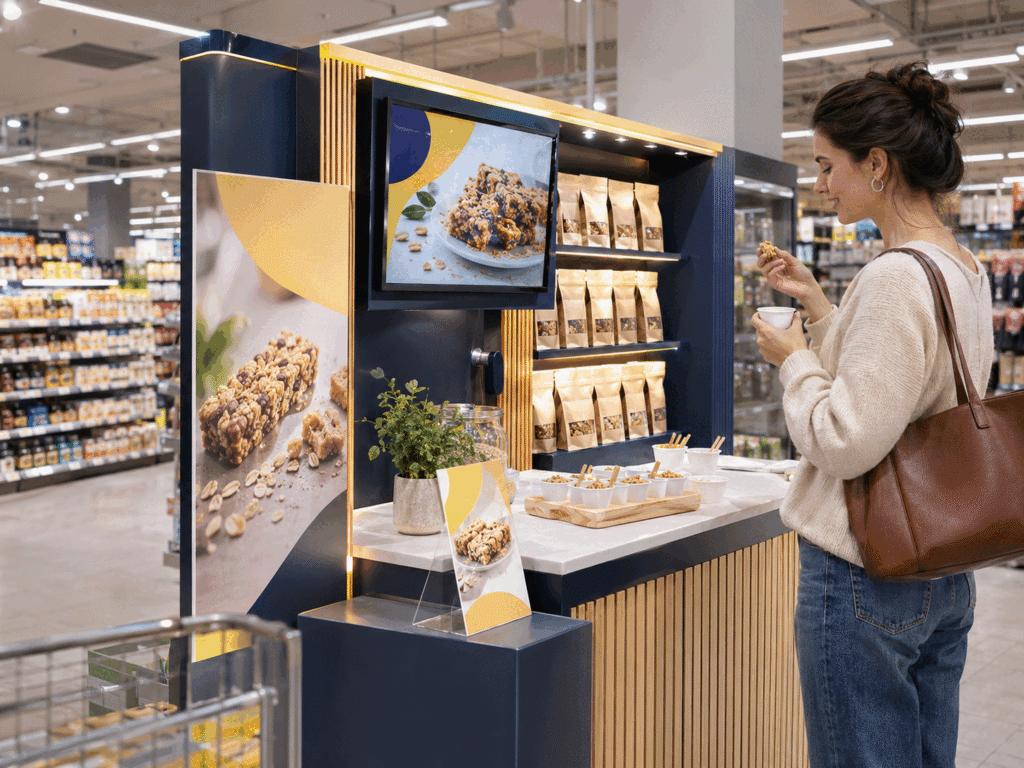
- In-store: Advertising across physical retail environments, including digital screens, audio, promotional displays and fixtures.
- Off-site: Advertising across external websites, social media, connected TV and other channels, using retailer data to reach relevant audiences.
Retail media networks generate revenue by selling access to relevant audiences and advertising opportunities through individual placements, sponsorships, targeted campaigns and integrated media packages.
Successful networks connect these opportunities through seven essential steps.
1. Understand your retail estate and media inventory
The first step in building a retail media network is understanding what you already have to sell.
Retailers often operate hundreds or thousands of locations, each with different layouts, audiences, footfall patterns, product categories and media assets. Treating every store as the same can mean overlooking valuable opportunities.
A clear understanding of the estate should include:
- Store profiles: Location, format, footfall and customer demographics.
- Physical media assets: Screens, promotional spaces, entrance displays and fixtures.
- Digital inventory: Website placements, apps, email and other digital channels.
- Audience intelligence: Shopping behaviour, product sales and local customer characteristics.
- External intelligence: Local demographics, competitor presence and other market factors.
Two stores may stock the same products but offer very different advertising opportunities. Understanding these differences helps retailers identify valuable locations and make better commercial decisions.
Importantly, retailers do not necessarily need to install digital screens to establish an in-store retail media network. Existing promotional spaces and physical advertising assets can already offer commercial value.
Successful retail media starts with understanding the estate, not simply installing more screens.

2. Connect media planning with products and stock availability
Where campaigns promote products sold by the retailer, advertising must be relevant to the stores and shoppers where it appears.
There is little value in promoting a product in a location where it is not stocked or available.
Retailers therefore need to connect media planning with:
- Product ranging: Which stores stock the advertised products?
- Stock availability: Is sufficient stock available to support the campaign?
- Local demand: Does the product align with local shopping behaviour?
- Store relevance: Are the selected locations appropriate for the brand?
- Replenishment: Can availability be maintained throughout the campaign?
For example, a brand launching a new product may want national exposure, but the product may initially be available in only selected stores.
Connecting store-level intelligence with product and stock information allows the retailer to identify eligible locations and develop a more relevant media package.
This helps reduce wasted investment, improve campaign relevance and ensure advertising supports products customers can actually purchase.
3. Build media packages around commercial opportunity
Once the estate, inventory and product information are understood, retailers can turn individual advertising assets into commercially attractive media packages.
Rather than simply selling available advertising space, retailers should combine relevant locations, audiences, products and formats into clear propositions.
These might include:
- In-store campaigns targeting particular regions or store groups.
- Category-specific campaigns aligned with relevant products and shoppers.
- Digital screen networks across selected locations.
- Combined physical and digital campaigns spanning stores, websites and apps.
- Off-site campaigns using retailer audiences and first-party data.
- Local campaigns targeting specific communities or catchment areas.
For example, a retailer could create a health and wellbeing package combining promotional space in relevant stores, app advertising and targeted digital media.
The value comes from connecting the campaign to suitable locations, products and audiences, rather than selling each placement separately.
Retailers that can bring in-store, on-site and off-site media together can offer brands more connected opportunities across the purchasing journey.
The focus should be on selling relevant commercial opportunities, not simply advertising formats.
4. Develop a clear commercial and advertiser demand strategy
A retail media network only generates revenue when brands and agencies invest in the opportunities available.
Retailers need a defined commercial strategy covering advertiser targeting, media pricing, inventory availability and routes to market.
Different formats may require different pricing models, including fixed-fee placements, sponsorships, impression-based pricing and integrated campaign packages.
Clear ownership across retail media, commercial, marketing, merchandising and operational teams is also important to ensure opportunities can be sold and delivered consistently.
However, creating advertising inventory does not automatically generate demand.
Retailers need to identify relevant brands and suppliers, understand their objectives and develop media propositions that address those needs.
Making opportunities easier to discover, evaluate and purchase can help attract investment. Digital media catalogues, clearly packaged inventory and straightforward booking processes can all reduce friction for advertisers.
Connecting media supply with advertiser demand is essential for turning available inventory into sustainable commercial revenue.
5. Invest in the right retail media technology
As networks grow, managing inventory, commercial opportunities and campaign activity across multiple locations becomes increasingly complex.
Store information, media assets, product ranges and campaign activity often sit across disconnected systems, creating reliance on spreadsheets and manual processes.
Retail media technology should help retailers:
- Centralise store, location and media inventory data.
- Connect product ranging and stock information.
- Identify and compare valuable media opportunities.
- Build and share physical and digital media packages.
- Manage inventory, bookings and advertiser demand.
- Coordinate campaign planning, scheduling and execution.
- Support consistent campaign reporting and measurement.
The technology required depends on the retailer’s estate, available channels and operating model. Not every network needs every capability from the outset.
However, connecting information across retail, merchandising, commercial and media teams helps retailers make better decisions and operate more efficiently.
Appropriate data governance and privacy controls are also essential, particularly when using customer information for advertising and audience targeting.
The objective is not simply more technology, but the infrastructure needed to manage and scale retail media effectively.
6. Build strong brand and agency relationships
Retail media networks depend on sustained advertiser investment.
Retailers need to communicate what makes their network valuable, including the audiences they reach, the locations they cover and the media formats available.
Brands should be able to understand where campaigns will run, who they can reach, what they can buy and how performance will be measured.
Clear media packages, accessible inventory and straightforward booking processes help improve the advertiser experience.
Retailers should also establish expectations around campaign objectives, budgets, creative requirements, reporting and performance measurement.
The easier it is for brands and agencies to discover, buy and evaluate media opportunities, the greater the potential to build long-term relationships and encourage repeat investment.
7. Make campaign execution and measurement part of the strategy
Selling retail media is only one part of running a successful network. Campaigns must also be delivered correctly and consistently.
In-store advertising can involve artwork approvals, production, supplier coordination, deliveries, store communications, installation and proof of execution.
Clear workflows help ensure the right creative reaches the right locations at the right time.
Measurement is equally important. Depending on the campaign and available data, relevant metrics include:
- Campaign delivery and proof of execution.
- Impressions and audience reach.
- Engagement and attributed sales.
- Return on advertising spend (ROAS).
- Incremental sales generated by the campaign.
Attributed sales and incremental sales are not the same. Attribution links sales to advertising activity under a defined methodology, while incrementality measures the additional sales caused by a campaign.
For in-store media, measurement must also reflect the advertising format and available evidence. An advert playing on a screen does not automatically mean a shopper has seen it.
Consistent reporting helps advertisers evaluate their investment and allows retailers to identify the locations, formats and packages delivering the strongest results.
These insights can inform future campaign planning, pricing and commercial decisions.

How Colateral supports retail media networks
Building a successful retail media network requires retailers to understand where media value exists, make those opportunities accessible to advertisers and deliver campaigns effectively.
Colateral helps connect these activities through three core capabilities:
- Intelligence: Bringing together location, media and wider retail information to identify commercial opportunities and build relevant media packages.
- Demand: Making media opportunities accessible to brands and agencies, supporting advertiser discovery and commercial engagement.
- Activation: Supporting campaign planning, coordination and execution across the retail estate.
By connecting intelligence, demand and activation, Colateral helps retailers move from fragmented media opportunities towards a more structured and scalable retail media business.
Discover how Colateral helps retailers unlock the media value of their estates.